wellness
Sleep Scientists Reveal Wind-Down Routines Pakenham Residents Should Try Tonight
New research is reshaping what experts know about pre-sleep habits, and local wellness spots are already ahead of the curve.
Listen in English · 4 min
How we reported this
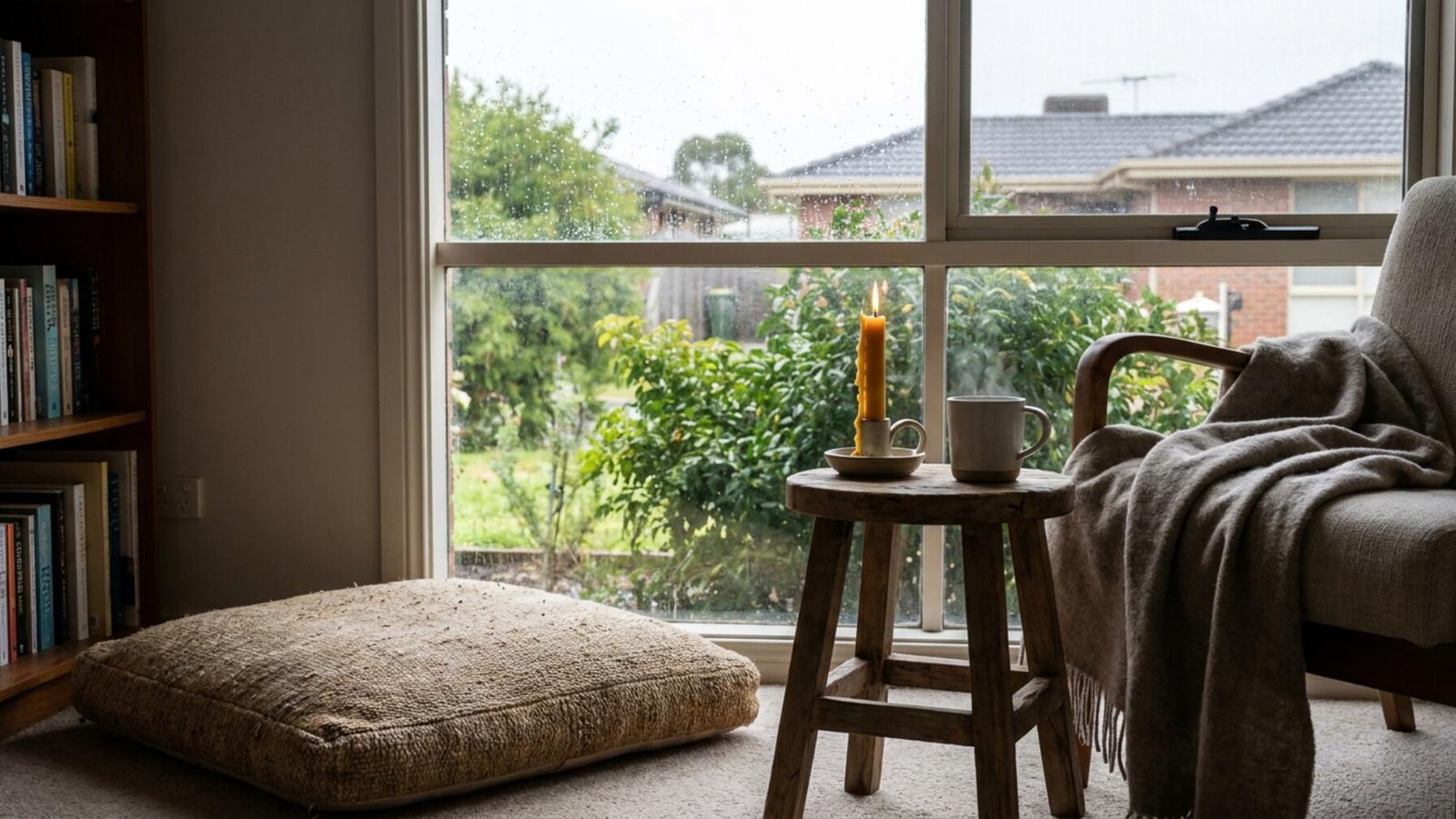
Seven hours. That's the minimum sleep duration the American Academy of Sleep Medicine identifies as necessary for healthy adult function, and research published in the journal Sleep Health in early 2026 found that fewer than 55 percent of adults in comparable Western suburban communities are consistently hitting that mark. The gap isn't usually about what happens in bed. It's about what happens in the 90 minutes before it.
Winter makes the problem sharper. With July temperatures in the Pakenham area regularly dropping below 7°C overnight, the temptation to stay up later under warm blankets scrolling a phone screen is real, and it's genuinely counterproductive. Cooler ambient temperatures actually support sleep onset, but the blue light from devices suppresses melatonin production for up to two hours after exposure, according to Harvard Medical School's Division of Sleep Medicine. The season that should be making sleep easier is being undermined by the habits people reach for to cope with it.
The good news is that a structured wind-down routine, roughly 60 to 90 minutes of deliberate pre-sleep activity, is one of the most evidence-supported interventions in sleep science. It doesn't require medication. It does require consistency.
What the Science Says to Do
The core principle is stimulus control: your brain needs repeated signals that a specific sequence of behaviours leads to sleep. Researchers at the Sleep Research Society recommend four anchors for an effective wind-down. First, a consistent stop time for work and screens, ideally 9:30 p.m. for someone targeting an 11 p.m. sleep. Second, a drop in environmental light, mimicking the natural dimming that once cued human biology. Third, a brief body temperature reset, a warm shower or bath raises skin temperature, which then falls rapidly, accelerating sleep onset. Fourth, a low-cognitive activity like light reading, gentle stretching, or breathing exercises to deactivate the prefrontal cortex.
The breath work piece is worth taking seriously. Box breathing, four seconds inhale, four seconds hold, four seconds exhale, four seconds hold, has been shown in a 2023 Frontiers in Psychology trial to reduce cortisol markers in participants within 10 minutes. That's not a trivial effect when elevated evening cortisol is one of the most common physiological reasons people lie awake.
Magnesium supplementation is also generating serious attention. A 2024 meta-analysis across 11 randomised controlled trials found that magnesium glycinate at doses between 200mg and 400mg taken 30 minutes before bed improved subjective sleep quality scores by an average of 17 percent. Costs vary, but locally, residents can find magnesium glycinate supplements at the Chemist Warehouse on Main Street, Pakenham, from around $28 for a 60-capsule pack, though consulting a GP before starting any supplement is the right first step.
Where Pakenham's Wellness Community Fits In
Local infrastructure is genuinely useful here. The Pakenham Library on Henry Street runs a weekly Thursday evening community wellbeing session that has included mindfulness and relaxation programming, the kind of low-stimulation social environment that supports the decompression phase sleep science recommends. Attendance is free with library membership.
For residents who respond better to physical movement as a transition ritual, the Cardinia Life aquatic and leisure centre on Lakeside Boulevard offers heated pool sessions until 9 p.m. on weekdays. A light swim, not vigorous laps, followed by the change room's warm shower ticks two sleep-science boxes simultaneously: moderate exercise and the body-temperature manipulation protocol, all within a 45-minute window.
The practical advice from sleep researchers is blunt: start small, make it boring, and do it every night for at least three weeks before judging results. Pick one anchor, the consistent screen-off time is the highest-yield starting point, and build from there. The 2026 data on sleep deficits suggests most people are one decent routine away from a meaningfully different kind of morning.
For personalised sleep health advice, speak with your local GP or visit the Pakenham Medical Centre on Main Street.